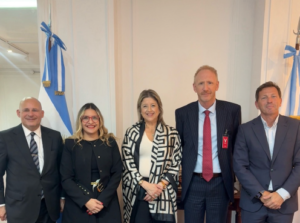
Argentina advances in criminal justice with technical support from Justicia Forense
In December 2025, Forensic Justice was honored to conduct a one-week technical assistance visit to Argentina. The amended federal law on DNA databases is already

In December 2025, Forensic Justice was honored to conduct a one-week technical assistance visit to Argentina. The amended federal law on DNA databases is already

José Corral, project leader.

Con la participación de 59 senadores y una votación de 58 a favor, la plenaria del Senado aprobó en segundo debate el proyecto de “Ley

On Thursday, the Argentine Senate approved the bill that modifies the expansion of the National Registry of Genetic Data for the identification of perpetrators of all types of crimes, including all crimes defined in the criminal code.
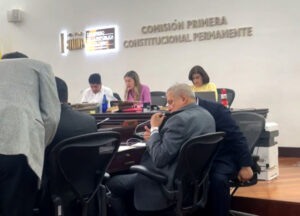
With an absolute majority vote, the First Constitutional Commission of the Senate approved in first debate, last Thursday, September 25, Bill No. 138 of 2004 “whereby the National Bank of Genetic Profiles is strengthened for judicial investigation purposes in criminal matters and other provisions are enacted”. The bill was filed in the General Secretariat of the Senate of the Republic of Colombia since August 20 of this year.

The Chamber of Deputies approved a bill that establishes the expansion of the National Registry of Genetic Data linked to Crimes against Sexual Integrity (RNDG),

Attorney General Juan Bautista Mahiques and the Public Prosecutor’s Office are seeking to create a genetic data bank for criminal investigations in the City of

During this May 14 and 15, in the facilities of the Auditorium of the National Service
of Legal Medicine and Forensic Sciences, is taking place the International Conference on Forensic Genetics: “Biological Evidence at the Crime Scene”.
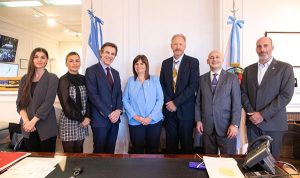
GTH-DNA President Tim Schellberg and Forensic Justice DNA Latin America campaign founders Kevin Mills and Daniela Suarez visit Argentina to advance the development of a national and provincial policy on forensic DNA databases.

Once again, advances in scientific research techniques and DNA technology help in the search for the truth for victims and support, with judicial evidence, the relevance of the “Justicia Forense – DNA Latin America” project.
 DOMINICAN REPUBLIC
They are studying the bill that creates the National DNA Registry System


 BOLIVIA
DNA-related legislation:
Bill of November 8, 2012: Download. The legislative proposal to create a DNA database in Bolivia began with the bill called the «Boliviano» Criminal Identification System (SIBIC), with the aim of applying biometric authentication and information technologies to register and determine the identity of criminals. This proposal was presented in the 2015-2016 legislature with number 0682015-16 and in the 2016-2017 legislature with number 028/201617.
Existing DNA databases
National Registry of Genetic and Fingerprinting Service administered by the Forensic Research Institute.

LAW OF THE GENETIC PROFILE BANK OF THE PLURINATIONAL STATE OF BOLIVIA
 PERU
PERU
Law 1398 of 2018 / Bill No. 05630, April 18, 2000. DNA: Database Law and Bank.
(Congress of the Republic of Peru – Link)
Existing DNA databases
Missing persons database Led by the National Police.
 EL SALVADOR
 URUGUAY
 HONDURAS