
Rosario, Argentina | October 2026
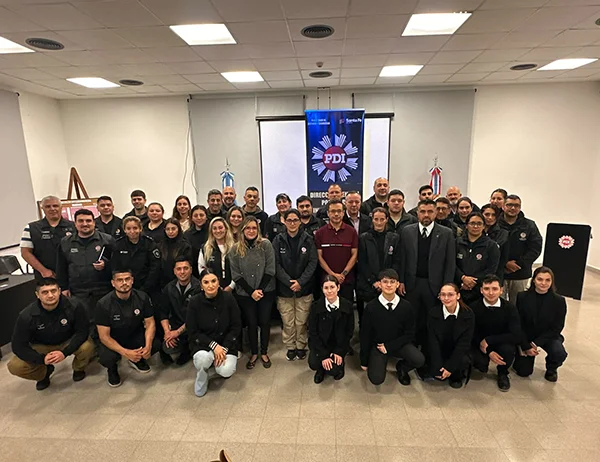
From October 5 to 9, 2026, Gordon Thomas Honeywell (GTH), in coordination with the British Embassy in Argentina, supported a specialized criminal intelligence training program for members of the Investigative Police (PDI) of Santa Fe Province and federal law enforcement personnel.
The five-day course, entitled “Intelligence: Doctrine and Criminal Intelligence Products,” was held at the PDI headquarters in Rosario. It aimed to strengthen investigators’ ability to transform information into actionable intelligence, identify criminal patterns, assess threats, and support evidence-based decision-making.
Connecting Criminal Intelligence with Forensic DNA Investigations
Beyond strengthening analytical capabilities, the initiative highlights an important principle of modern criminal investigation: understanding criminal behavior is essential to identifying, locating, and effectively using forensic evidence.
Criminal intelligence allows investigators to analyze how criminal organizations operate, identify recurring patterns, establish potential connections between offenses, and formulate hypotheses about individuals, locations, and events.
When integrated with crime scene examination, these analytical capabilities can help guide investigative priorities, including identifying additional locations where biological evidence may be found and assessing possible connections between crime scenes.
Forensic DNA analysis and criminal DNA databases can then provide independent scientific evidence to test investigative hypotheses, identify potential links between cases, and support the investigation of repeat offenders and serial crimes.
Strengthening Criminal Intelligence Capabilities
The training was delivered by José Eduardo González Morales, a retired Colombian National Police officer and criminal intelligence specialist with more than 22 years of experience in intelligence analysis, operational planning, threat assessment, and institutional doctrine development.
The program combined theoretical instruction with practical exercises covering intelligence legislation, information collection, source evaluation, criminal network analysis, structured analytical techniques, and intelligence products for decision-makers.
Participants worked through simulated criminal scenarios, applying intelligence methodologies to identify relationships between incidents, recognize information gaps, evaluate alternative hypotheses, and develop actionable assessments.
Daniela Suárez Naranjo, GTH’s Government Affairs Consultant for Latin America and a specialist in criminal policy and organized crime, supported the coordination and institutional engagement associated with the initiative.
The collaboration between the British Embassy, GTH, and the authorities of Santa Fe, Argentina, demonstrates the importance of international partnerships in strengthening institutional capacities.


 EL SALVADOR

 DOMINICAN REPUBLIC
 URUGUAY
 HONDURAS


 BOLIVIA
 PERU