
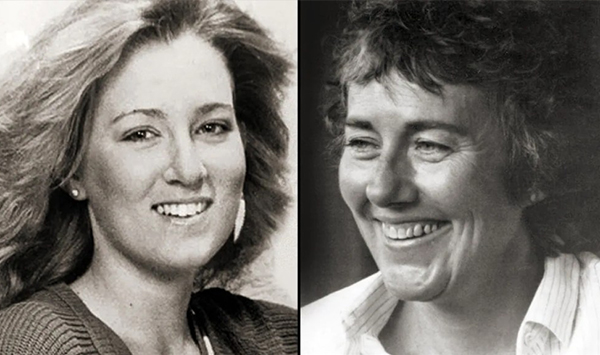
On the morning of November 29, 2022, Toronto, Canada police announced that they had arrested and charged a man named Joseph Sutherland, 61, for the murders of Susan Tice and Erin Gilmour in 1983. These are one of the most recent cases to be solved using forensic DNA technology.
Police are now reviewing Sutherland’s past, analyzing his record to determine if he may be connected to other crimes. Since the murders of these two women he moved from Toronto and remained in Ontario for 39 years.
This has caught the attention of authorities who are investigating, based on the genetic profile of this killer, all possible connections to any possible case and DNA collected at crime scenes throughout Ontario, to ensure that he is not responsible for any other crime.
Due to his criminal profile, he is considered a person of interest in other unsolved cases involving sexual violence, except where he has already been excluded through DNA testing.
One of the women murdered in 1983 in Toronto was Susane Tice, a social worker and mother of four teenage children, who was found dead in the second-floor bedroom of her home with multiple stab wounds to the chest.
Four months later, Erin Gilmour, the second victim, who was an aspiring clothing designer, was found stabbed to death in her home.
At the time, 40 years ago, both investigations were frozen until a breakthrough in 2008, thanks to DNA technology, which allowed police to conclude that Tice and Gilmour had been murdered by the same man.
But who that man was remained a mystery for another decade. In 2019, Toronto police partnered with U.S.-based laboratory Othram Inc. to produce a viable DNA profile from genetic material that had been left at homicide scenes.
Typically, once a genetic profile is created, investigators submit the genetic information to a database that allows them to compare the sample to the hundreds of thousands of other genetic profiles obtained at crime scenes, or from people who voluntarily provide their genetic material for searches for missing relatives.
These DNA or genetic fingerprint databases have been used to open decades-old homicide cases. In the Tice and Gilmour cases the forensic geneticists working on the investigation had a major challenge in developing the killer’s genetic profile, as it was contaminated, degraded and mixed with the genetic material of his victims.

Finally, in the second half of 2022, investigators focused on Sutherland, who had never before been a suspect or person of interest in the case, demonstrating that without science and the use of forensic DNA, the killer would have never been identified.
 EL SALVADOR
 DOMINICAN REPUBLIC
 URUGUAY
 HONDURAS

 BOLIVIA
 PERU
PERU